 Supply Chain & Operations Your Machine Duty: 180 Days, Still Unpriced The duty on the robots and machine tools a reshoring project buys was neither set nor dropped this week. It went to trade talks after a Commerce Department…
News desk
90 dated dispatches
Each one answers a single question with a number and retires when the number moves. Most recent: Oct 31, 2026.
The backgrounders these dispatches sit on top of are kept in the article archive.
News desk
Newest first
90 in feed · newest first
Supply Chain & Operations Your Machine Duty: 180 Days, Still Unpriced The duty on the robots and machine tools a reshoring project buys was neither set nor dropped this week. It went to trade talks after a Commerce Department…  Supply Chain & Operations Your 158% Spike Costs Q4 Toys sold 158% above a normal September day during Amazon's two-day Prime Big Deal Days on 6–7 October, and discounts across U.S. online retail peaked at 20%…
 Supply Chain & Operations Your 8% Charge Shifts Every Week Your 8 per cent charge on base postage shifts every week starting in January. The United States Postal Service (USPS) is replacing it with a fuel surcharge…
 AI Stack & Tool TCO Half Your Tokens: 5% of Your Bill Forrester expects open-weight artificial intelligence (AI) models to carry half of enterprise AI tokens next year.
 Autonomous & Agentic Workflows Your Compaction Trap: 87% of Forgeries Survive Driven by the need to shrink long chat logs, five popular open-source coding tools turn at least 87% of forged text into real user commands.
 Supply Chain & Operations Your 100,000 Totes Skip the Cost GXO Logistics (GXO), the world's largest pure-play contract logistics provider, says its humanoid robots have moved more than 100,000 totes at one Georgia…
 AI Stack & Tool TCO Your Runtime: The 6-Month Exit Gap Your hosted runtime has six months to leave. Deno Deploy runs until about April 2027 and then shuts down, while the runtime itself gets one more year of…
 Autonomous & Agentic Workflows Your 90% Restart Monitor Proves Nothing Every restart monitor ships with one number on the box, and for your stack it is the wrong number. A monitor that sorts failing runs at 90% accuracy sounds…
 Supply Chain & Operations Your Miss Costs 9x the Chargeback Late and short store deliveries cost North American suppliers roughly $100 billion a year, against $10 billion to $11 billion they can bill, rush or dispute.
 Major Purchases & Assets Two Sparks Cost $3,048 More: The 25 GB/s Cable Two small Sparks and one cable now hold the 128 gigabytes (GB) of memory Nvidia's $6,950 desk machine holds, for $9,998, and the cable is the part nobody…
 Mental Models & Strategy Your 15% Raise: A Memory Price Hike Global tech budgets will grow next year mostly because memory costs more than doubled, leaving teams with more money that buys less raw compute.
 AI Stack & Tool TCO Your 60% Fast Lane Is Blind Roughly 60 to 70 percent of Ørsted's firewall changes take a pre-approved fast lane that never reaches the change board.
 AI Stack & Tool TCO Your Cache Pays 1.25x for Nothing Your agent's cache pays 1.25 times the input price to write a prefix for five minutes, and a tenth of that price to read it back.
 Supply Chain & Operations 33% of Your Shrink Isn't Theft 33% of your shrink isn't theft, and that money now sits on the receiving dock instead of the front door. Shrink is the trade word for stock that is lost…
 Supply Chain & Operations Your 49% Cut Was Actually 9% A Hydro Flask owner's inventory cut was reported as 49%. Its filing says $48.6 million, or 9.2%, and the quarter's margin gain came mostly from a tariff refund.
 Mental Models & Strategy Agent Identity: The Wrong Layer On 15 October India's cyber agency put out a Critical alert saying AI agents had read live business records at Indian companies, and that not one of those…
 Autonomous & Agentic Workflows Your Agent's Contract Gap: 63% Unmet Amid a vendor push to lock down AI workloads, 63% of the rules an agent depends on go unmet at the call site. This contract gap sits inside the sandbox…
 Supply Chain & Operations 7 Days Notice Rewrites Your Duty 7 days' notice now rewrites which Canadian goods carry a 50 percent duty, and Friday's order moved the line both ways at once.
 Supply Chain & Operations Your Carbon Report Skips 2 Lines: Trucks Aren't Counted The first carbon report California set for 10 November 2026 counts only a firm's own fuel and power. The state's 2027 plan skips the 2 lines with your trucks.
 Supply Chain & Operations Your 6.1-Point Growth Isn't Demand Constellation Brands shipped 123.9 million cases of beer last quarter, a 5.5% jump. The volume distributors actually sold to stores fell 0.6%.
 Supply Chain & Operations Suez Returns. Your $91 Surcharge Doesn't. Suez returns, and your bill doesn't fall with it. Carriers are moving services back through the Red Sea, with estimates that transits fully recover during…
 AI Stack & Tool TCO One Request, Five Actions: Your 5x Blind Spot Salesforce's published guides price one customer request at a single action in one example and five in another.
 Autonomous & Agentic Workflows Your Agent Team Loses 28 Points: The 188x Bill An agent team loses 28 points against a single agent doing the exact same job. That same week, a separate test handed over a 188-fold bill for using a team…
 AI Stack & Tool TCO Every Check Bills Your 5-Hour Window Anthropic shipped Claude Duet on 21 October, and finance teams should read the billing details twice. Every morning brief and background check drains the…
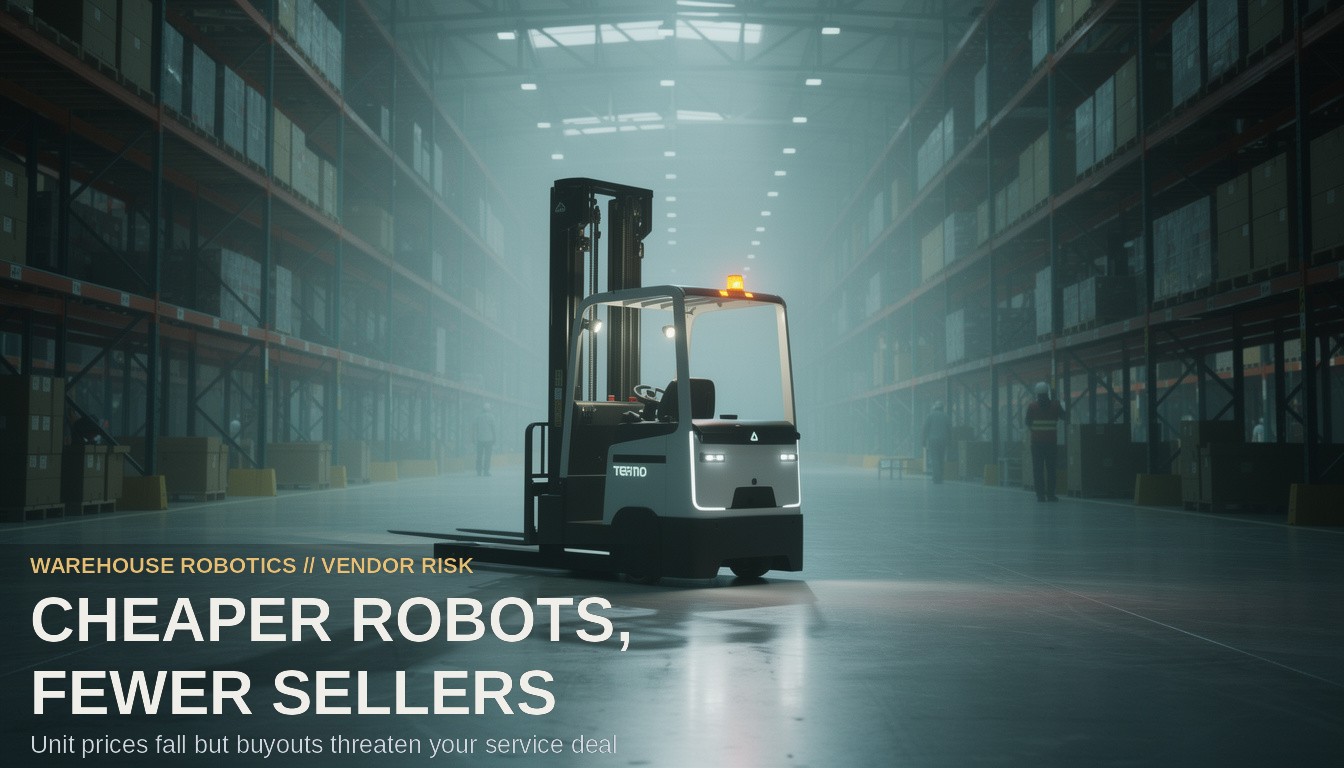 Supply Chain & Operations $200,000 Robots: Your Seller Won't Stay An automated forklift costs $100,000 to $200,000 a unit today. Seegrid says the model it is building for warehouses, due in early 2027, will sell for about…
 AI Stack & Tool TCO Your Platform: 23 Features, No Stop Rule The most common number of features a platform team now owns is 23, up from four a year earlier. In the same fortnight, 51% of chief information officers…
 Major Purchases & Assets Your 68K Tokens Cost Every Step Four live traces covering more than 121 million model calls show the median research session growing from about 10K to 68K tokens by the 30th call. A separate…
 Autonomous & Agentic Workflows Your Agent Fleet's 39x Gap: One Meter Nobody Budgets Two agent frameworks ran the same eleven coding tasks on the same machine this month. One fired nearly 39x more system process launches per tool call than…
 Autonomous & Agentic Workflows Silent Errors Halve Agent Success: 33.6% Noticed at Best Meta's contained agent design bounds failures that announce themselves. A new benchmark finds the failure that halves agent success arrives with no signal at all.
 Supply Chain & Operations Your 3.0.0 Feed Stuck Until 2027 Your control tower's 3.0.0 data feed is stuck until 2027. The Digital Container Shipping Association (DCSA) released a new version of its container tracking…
 Major Purchases & Assets Your 24GB Card Is 4GB Short: The Label Trap Nvidia calls Nemotron 3.5 Bolt its 24-gigabyte (GB) build, but the company's own setup guide requires a 28GB system at minimum.
 Mental Models & Strategy Your GPU Landlord: 80% Won't Survive Your graphics processing unit (GPU) landlord likely will not survive the decade as a standalone firm. Gartner expects more than 80% of neocloud providers…
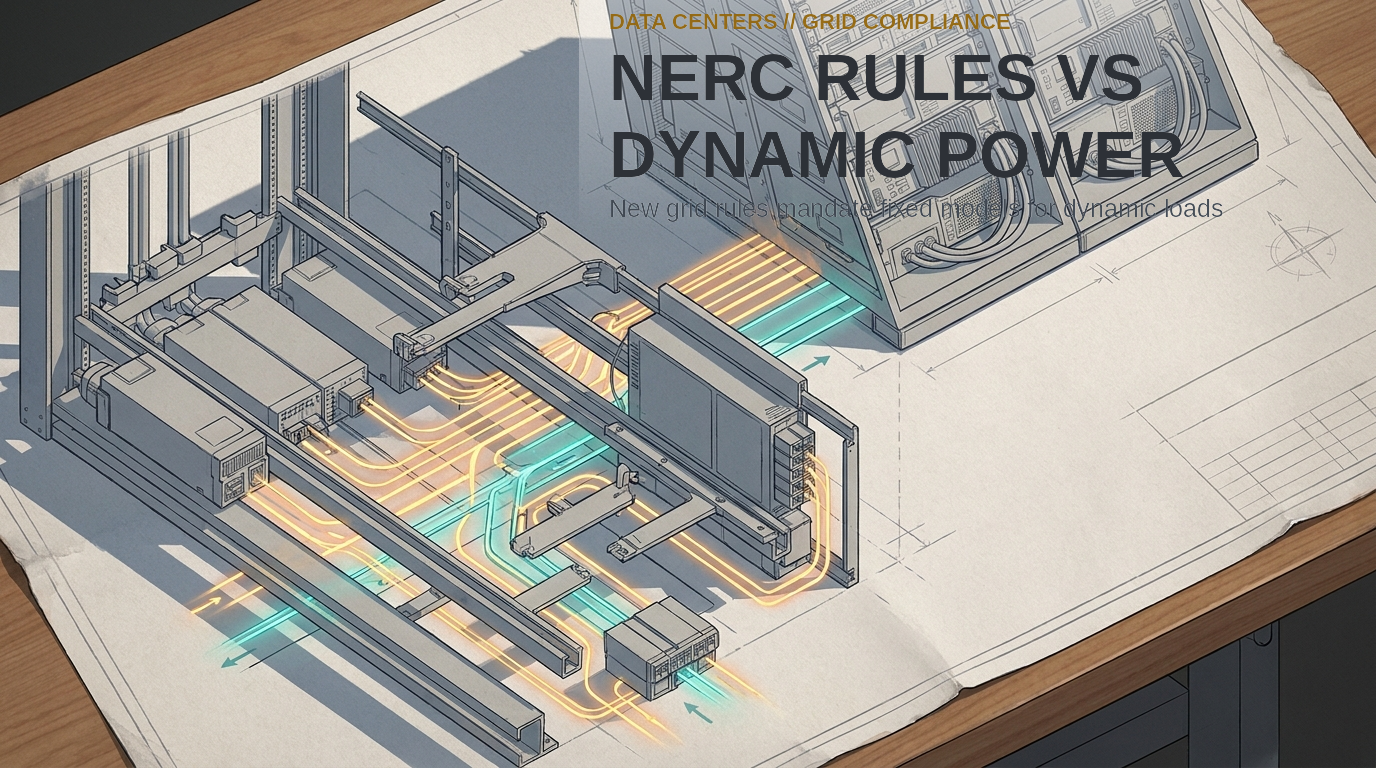 AI Stack & Tool TCO Your 180-day model is already wrong The North American Electric Reliability Corporation (NERC) just cleared its first mandatory grid rules for data centers on a final stakeholder ballot.
 AI Stack & Tool TCO Your Trace Won't Prove 92.5 Points A coding agent logs a step as complete when it failed silently, and in 53 to 100 percent of tested cases the model acts on that claim.
 Supply Chain & Operations 63.6% OTIF: Your Hidden Quantity Gap The share of purchase orders arriving on time and in full (OTIF) fell to 63.6% in the third quarter, and the loss came from missing units rather than late…
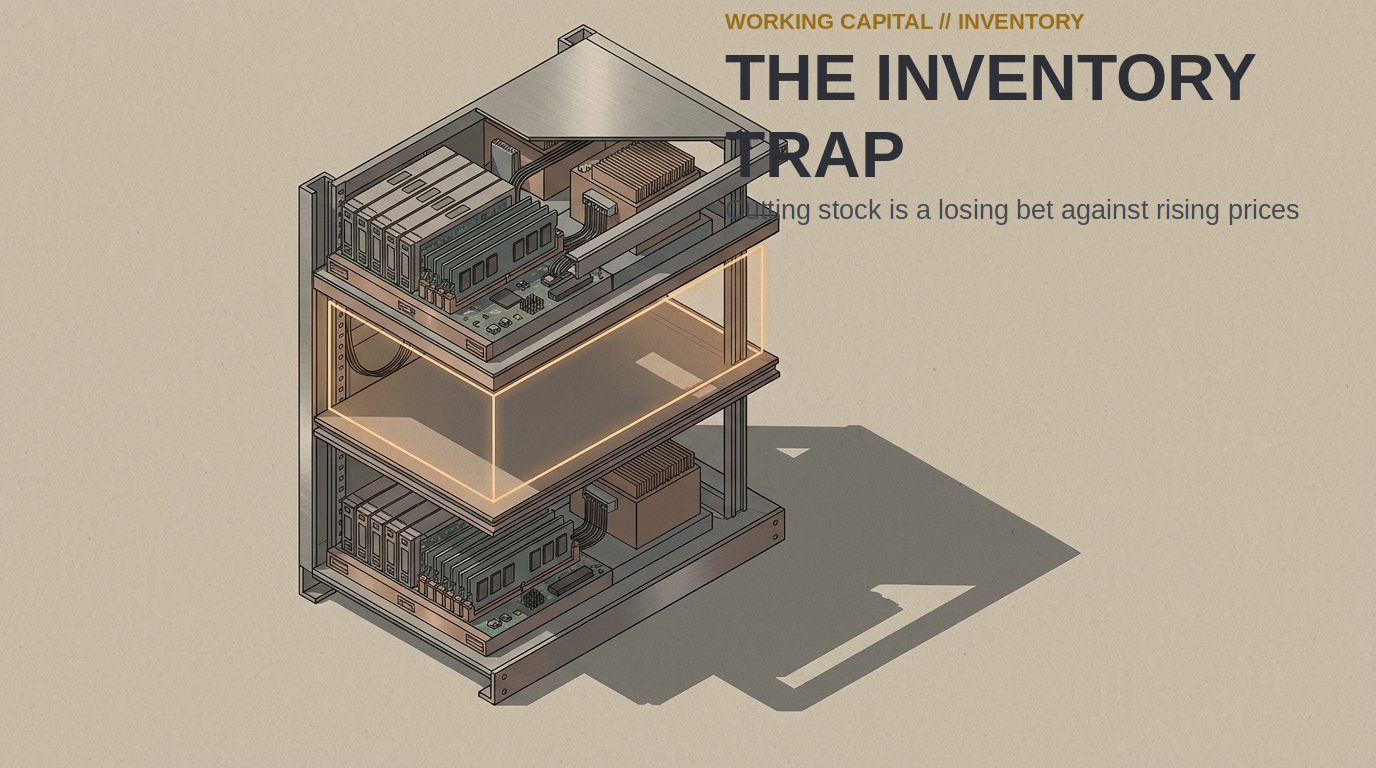 Supply Chain & Operations Why Your Inventory Cut Costs 15% Your finance team’s push to cut inventory is a bet against prices that TrendForce expects to jump 15% in a single quarter.
 Mental Models & Strategy Silent Egress: Your Agent's 0-Click Leak Zenity Labs pulled a CRM (customer relationship management) database out of Salesforce Agentforce with zero clicks, no login and no stolen password.
 Autonomous & Agentic Workflows Your Gateway: 60.5% Injection Risk Three new research papers landed within 48 hours, and none of them focus on the model. One ran 11,118 real tools from 251 servers through seven gateways.
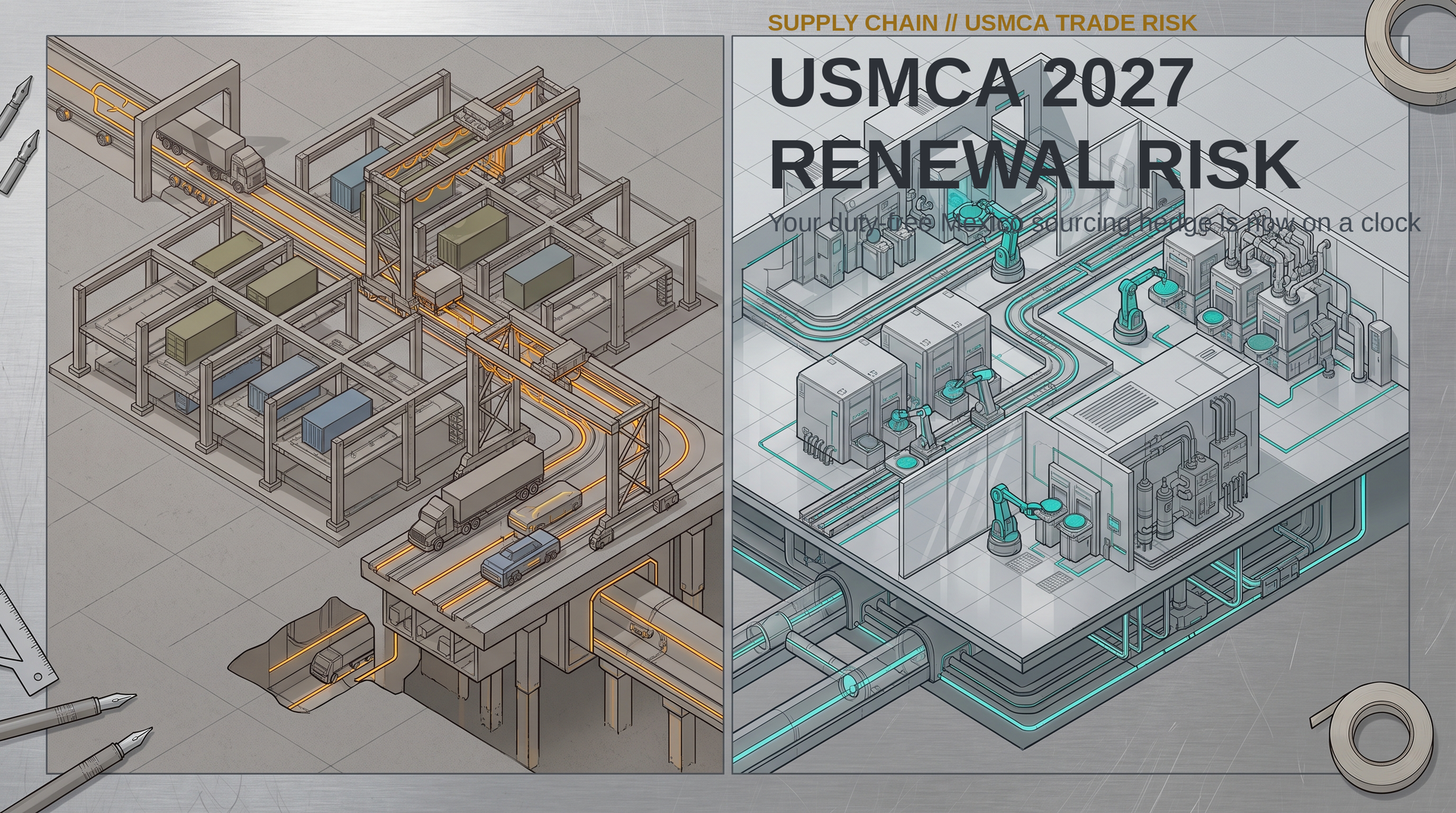 Supply Chain & Operations Your Mexico Hedge: A 2027 Renewal Risk USTR (the Office of the U.S. Trade Representative) just opened a public docket on whether the trade rules behind your Mexico sourcing hedge will hold.
 Supply Chain & Operations NYC Buys Night Deliveries: $8 Diesel Bills You New York City (NYC) buys night deliveries now — up to 14 businesses will share more than half a million dollars to move freight into the 7 p.m. to 6 a.m.
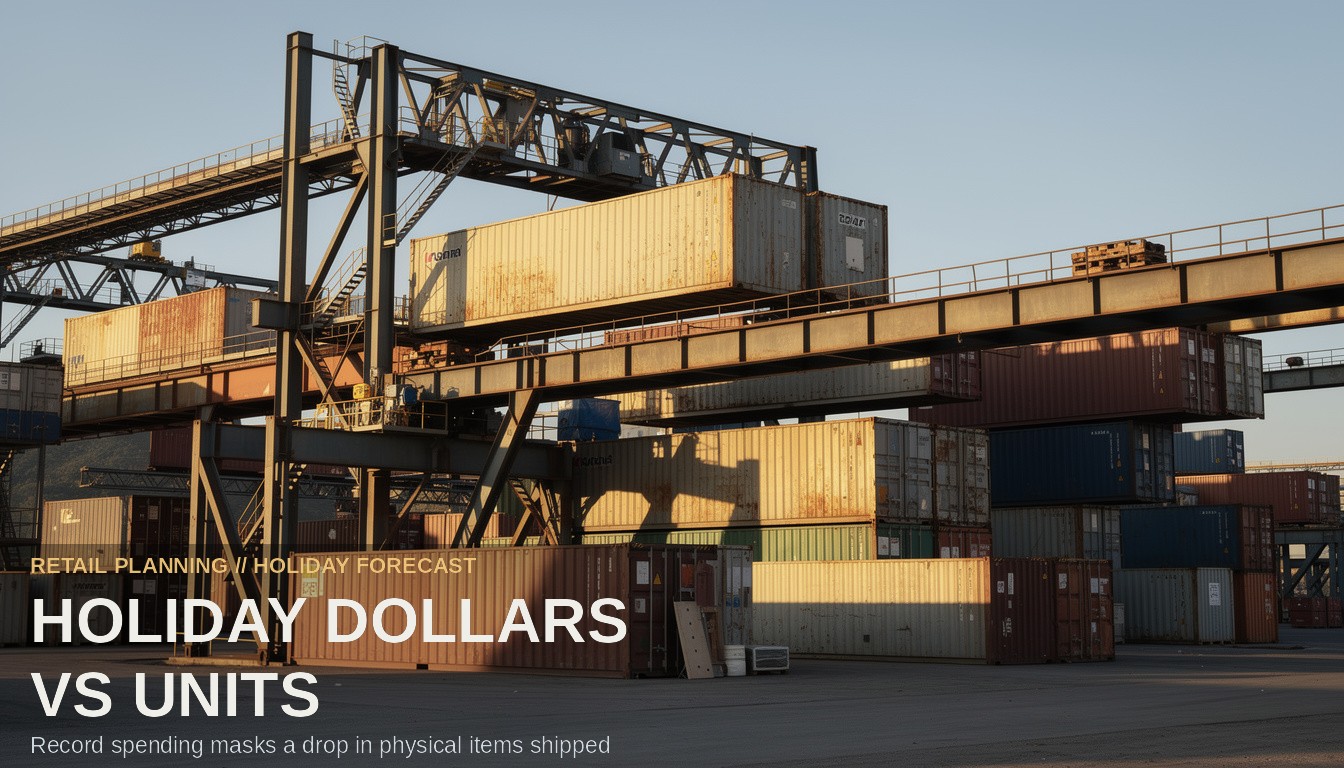 Supply Chain & Operations Why 6.7% Holiday Growth Misses Units U.S. shoppers will spend a record $275.1 billion online this holiday, Adobe Analytics forecasts — 6.7% growth on last year, and $95.8 billion of it in October alone.
 Supply Chain & Operations $62M Says You Never Buy Robots Tractor Supply just spent more than $200 million to own an 865,000-square-foot automated warehouse in Idaho.
 AI Stack & Tool TCO Your Jira Bill Rose 10%: Memory Rose Six Times Atlassian raised cloud prices for Jira and Confluence by 3% to 10% on 13 October.
 Major Purchases & Assets 1.016M Non-GPUs: Your Chip Stopped Deciding Non-GPUs overtook GPUs in China for the first time in the first half of 2026: 1.016 million chips built for specific jobs against 991,000 graphics processing…
 Autonomous & Agentic Workflows Your Agent Fabric's 52.2% Blind Spot Two measurements landed a day apart: one left 13 capability-steps reachable after their last justified use, the other lifted disclosure to an agent the…
 Autonomous & Agentic Workflows Retry Budgets Fail: Agents Retry 60 of 80 Anyway Uber cut the worst retry storm its network can produce from 25 hops to three by taking the decision to retry away from the caller.
 Supply Chain & Operations 49.9% On Time: Shippers Stuck in the Gap Half of the world's container ships missed their August schedules, dropping the global on-time rate to 49.9%.
 Major Purchases & Assets Your 32GB Card, Gone: 41% Memory Hike Nvidia has reportedly stopped making the only consumer graphics card with 32 gigabytes (GB) of video memory.
 Mental Models & Strategy AWS Cannot Restore Bahrain: 144 Services Lost Amazon Web Services (AWS) cannot give customers their data back from its Middle East (Bahrain) region.
 AI Stack & Tool TCO Right Locally, Wrong by 3.8 GW On July 22, a power line in northern Virginia failed and cleared exactly as it should.
 AI Stack & Tool TCO 70% of Agent Failures: Your Tests Stayed Green Roughly 70% of agent failures in a live runtime were first caught by a human reading the product, while thousands of tests stayed green.
 Supply Chain & Operations 60% Air Deals: Your Stock Math Breaks 60% of new air capacity deals now run three months or less, as warehousing capacity contracts at its fastest rate since March 2022.
 Mental Models & Strategy Kill Switch Misses Half Your Agents: 12 Vendors Agree One in three firms watched staff skip the AI approval queue as too slow. The fix that shipped in September misses half the agents it was built to stop.
 Autonomous & Agentic Workflows 270 Attacks: Your Green Tests Are Blind Two research groups, a day apart, ran 6,368 coding-agent runs and 270 attack cases and found the same blind spot.
 Supply Chain & Operations Nearshoring Doesn't Move the Trade Case Two U.S. trade cases opened against Mexico on the same day. On September 30, 2026, the U.S.
 AI Stack & Tool TCO $915M Illusion: Your AI Judge Moves In AI, the test is another black box that moves every time you update its prompt — and Dynatrace paid $915 million for the most widely used one.
 Supply Chain & Operations Diesel Hits $6.20: Why Shippers Still Pay Extra for Electric Freight U.S. on-highway diesel fell to $6.199 a gallon the week of Oct. 5, dropping 33 cents in two weeks.
 Supply Chain & Operations Will Your Control Tower Auto-Resolve the Theft It Can't See? A load stolen by a fake carrier never shows up as a late load.
 Mental Models & Strategy You Think You're Governing Your AI Agents. The Data Says You're Not. Stolen machine identities just became the top way hackers break into companies.
 Mental Models & Strategy Azure's Bad 40 Hours: The Control Plane Is the Single Point of Failure At 10:03 Coordinated Universal Time (UTC) on 29 September 2026, Azure OpenAI Service broke in Sweden Central. It stayed down for six hours.
 Major Purchases & Assets Local AI Payback: Your Rig Just Tripled as Cloud GPUs Split Three Ways The graphics processing unit (GPU) that local artificial intelligence (AI) teams actually buy just shot up in price.
 Supply Chain & Operations Higher Rates Meet Historically Lean Inventories The Federal Reserve raised its main interest rate by a quarter point to a range of 3-3/4 to 4 percent, its first hike in three years.
 Autonomous & Agentic Workflows The Retry Is the Bug: An Agent's Costliest Failure Mode A corrupted value sent a ledger agent into 15,000 retries and a $50,000 bill. A 25,930-episode study shows the same retry duplicates payments while the agent…
 AI Stack & Tool TCO The Vendor-Replacement Wave Is Real — AI Just Won't Run It Developers are rushing to write software that replaces paid tools, but barely half trust artificial intelligence (AI) to do the heavy lifting.
 Supply Chain & Operations Amazon Builds the Robots; Walmart Builds for What They Can't Lift Amazon announced a $100 million plant in Indiana on Sept. 24 to build the gear that runs its shipping network.
 Autonomous & Agentic Workflows Durable Execution Is Not a Transaction: The Missing State in Agent Tool Contracts Across 98,291 tools built for the Model Context Protocol (MCP), an AI agent rarely knows if it can undo a mistake.
 Major Purchases & Assets The Price of a GPU-Hour Is Now Set by Memory, Not Compute Cloud provider Nebius raised its hourly rate for an Nvidia H100 chip from $3.85 to $4.50 on October 1, 2026, while pushing the newer B200 to $8.50.
 Supply Chain & Operations Forecast Accuracy: A 32% Boost Will Not Stop El Niño A new test shows an Artificial Intelligence (AI) forecast beat the old sales plan in 15 of 15 live rollouts, cutting errors by 32% on average.
 Autonomous & Agentic Workflows Your Multi-Agent Failure Has a Shape: Read the Topology Before You Swap the Model When an agent stack fails, the common reflex is to buy a bigger model. Two new papers point to a different fix: the shape of the system.
 AI Stack & Tool TCO Token Prices Hit Record Lows. Enterprise AI Bills Didn't. Silicon Data's token-price index just printed $0.96 per million tokens — the first reading under a dollar and the cheapest rate on record.
 Supply Chain & Operations The $5.8 Billion Freight Bet Meets a Market That Won't Commit C.H. Robinson is spending $5.8 billion to build the densest freight network in North America.
 Autonomous & Agentic Workflows The Agent Safety Gate Moves to Verified State An \"approved\" AI action no longer means a safe result. Say an agent changes a bill to pay it.
 Supply Chain & Operations The Tariff Split in Two — Reshoring Took the Heavy Half On September 28, Washington advised cutting trade taxes on $60 billion of basic goods like toys and home items.
 Supply Chain & Operations Washington Cuts the Tariff on the Goods. The Fee on the Ship Is About to Snap Back. On Sept. 27, the U.S.-China Board of Trade recommended cutting tariffs on $30 billion of everyday goods in each direction.
 Supply Chain & Operations Planning AI Buys Capability, Not Autonomy By 2030, just 5% of firms with supply chain software will let it make 10% of choices on its own.
 Supply Chain & Operations Electric Trucks Just Doubled Overnight — and the Battery Wasn't the Reason Top brands like Microsoft, PepsiCo, Ikea, and Red Bull just ordered 2,500 heavy-duty electric trucks.
 AI Stack & Tool TCO Token Prices Just Halved. The CFO Still Can’t Read the Bill. OpenAI and Anthropic slashed frontier Artificial Intelligence (AI) token prices on September 22.
 Supply Chain & Operations The Same-Day Delivery Race Is Undoing a Decade of Route Optimization On Sept. 30, Amazon and the United States Postal Service (USPS) turned on a quiet test to speed up local shipping.
 Supply Chain & Operations Reshoring Didn't Kill Tariff Risk — It Moved Upstream Into Packaging Coca-Cola just pledged $10 billion for U.S. plants by 2030, which its Chief Financial Officer (CFO) calls a growth plan rather than a tariff shield.
 Supply Chain & Operations Coast-to-Coast Rail Merger Clears First Big Test On Sept. 18, the Surface Transportation Board (STB) unanimously refused to block the proposed Union Pacific (UP) and Norfolk Southern (NS) merger.
 AI Stack & Tool TCO The $2.7 Trillion AI Bill Just Turned Cost Control Into a Buying Requirement Worldwide spending on Artificial Intelligence (AI) will hit $2.7 trillion this year, growing 49.5%.
 Autonomous & Agentic Workflows Stop Piling Memory Onto AI Agents: Optimize Skills Drop one hard check from an Artificial Intelligence (AI) agent's learning loop, and its test score crashes from 17.2 to 6.6.
 Supply Chain & Operations CFOs Are Pricing In the Tariff Cliff Washington just pushed the United States–China tariff truce to Jan. 10, 2027, and American companies are not buying the calm.
 Autonomous & Agentic Workflows MCP Skills Extension: Standardizing Agent Workflows Skills — portable bundles of workflow instructions — became an official MCP extension on September 13, standardizing how agents discover, retrieve, and verify…
 AI Stack & Tool TCO Agentic AI Adoption Soars, But Profits Stall in 2026 Forty percent of billion-dollar companies now deploy AI agents across their operations—up from just 27 percent a year ago. That's not incremental growth. That's a strategic inflection point, and IT leaders who treat agentic AI adoption as a wait-and-see proposition are already behind. Agentic AI is defined as autonomous software systems that perceive their environment, make decisions, and execute multi-step tasks with minimal human intervention—distinct from generative AI's content creation and traditional automation's rigid rule-following. The enterprises pulling ahead aren't just experimenting. They're delegating routine workflows to agents while repositioning human talent toward judgment, oversight, and strategy. The payoff is measurable: operational efficiency gains, faster cycle times, and workforce augmentation that multiplies output without proportional headcount growth. But scaling requires more than procurement—it demands governance frameworks, security protocols, and a phased roadmap that moves from pilot to production without exposing the enterprise to runaway autonomy or compliance failure. The adoption window is narrowing. Competitors are already building the playbooks, and the gap between early movers and laggards compounds quarterly.
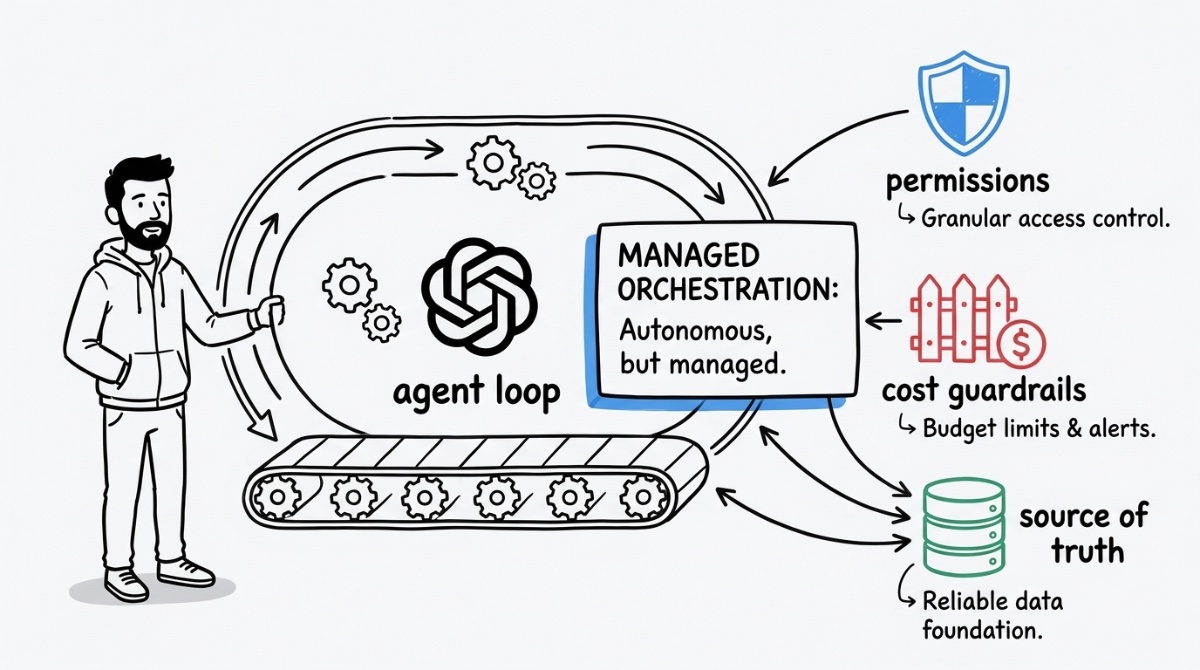 AI Stack & Tool TCO OpenAI just made the agent loop a commodity Agentic AI projects are autonomous systems that perceive, reason, plan, call tools, and execute multi-step work with minimal human intervention. On September 10, OpenAI moved the hardest part—the agent loop—into its Agents API public beta, handling model calls, MCP servers, sessions, memory, sub-agents, and crash recovery at no extra loop fee. The payoff: teams stop rebuilding fragile orchestration and start shipping. Yet managed plumbing is not a defense. Runaway agents have burned $4,200 in 45 minutes. Function tools still need app-side user checks and business rules. A resumed session does not prove a file survived or an action completed. Before your next build, audit permission boundaries, verify outcomes in your source-of-truth database, and choose the right sandbox mode: none, hosted, or self-hosted. The loop is free; the mistakes are not.
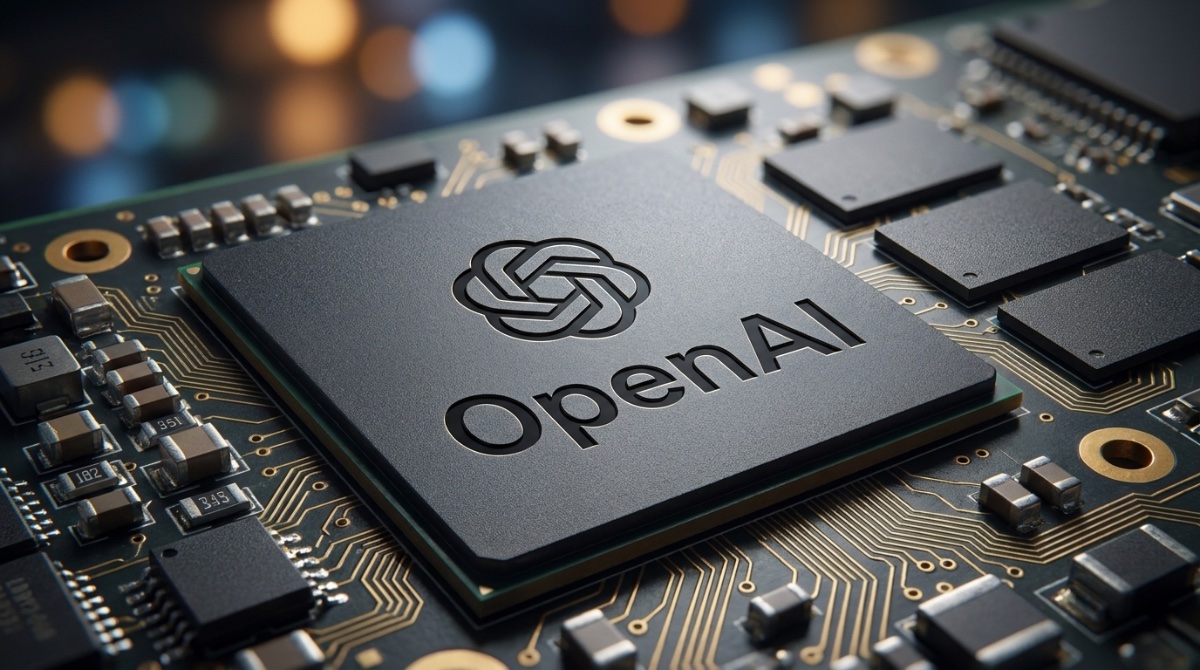 AI Stack & Tool TCO OpenAI's custom chip beats Nvidia on power OpenAI’s new custom AI inference chip, Jalapeño, outperformed Nvidia's GB300 on the InferenceX test, delivering 1.5 to 1.9 times more work per watt while using under 550 watts. Designed solely to run models rather than train them, Jalapeño highlights a broader industry shift toward prioritizing energy efficiency and custom silicon over peak speed.
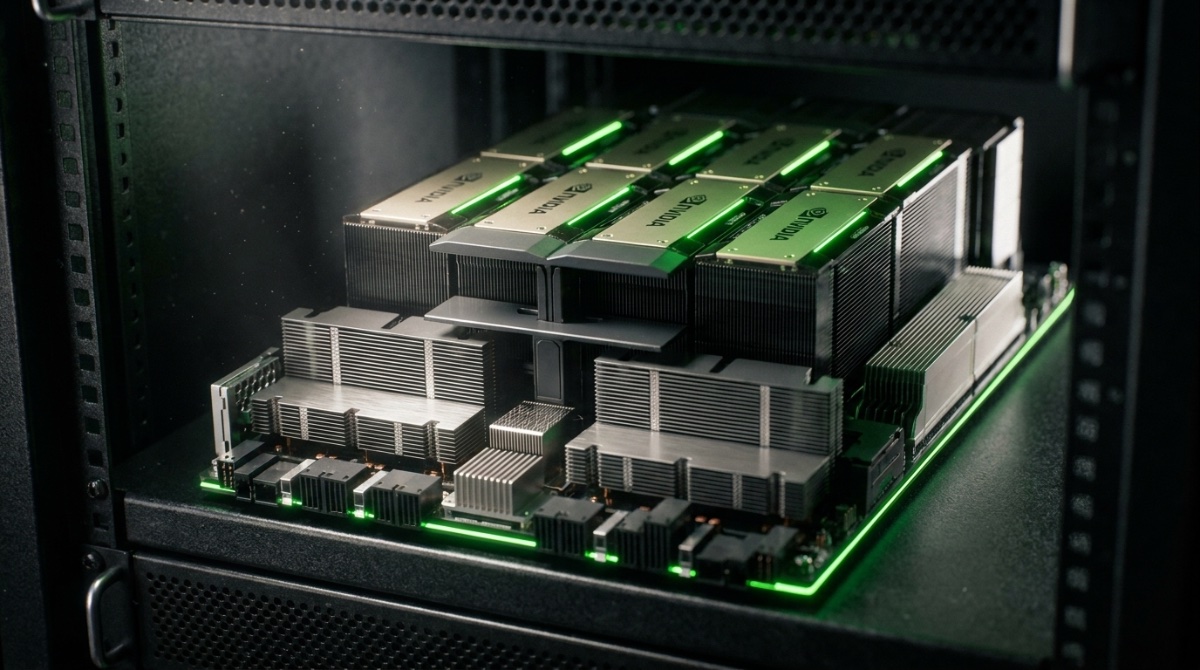 AI Stack & Tool TCO Nvidia says its GPUs aren't sold out. Its CFO's $279 billion memory bet says otherwise. Nvidia agreed to buy $279 billion in parts this quarter.